
In Mwakafyuyu Village, GVH Mwangomba under Traditional Authority Kilupula in Karonga District, 57-year-old Josephine Kalambo, a widow, is rebuilding her life through Lusubilo Community Care’s Livelihood Support Project, implemented with financial support from Manos Unidas of Spain.
Before joining the project, Josephine faced significant challenges in providing for her family and had little knowledge of modern rice farming. Her harvests were low, and meeting basic household needs was a constant struggle. When she enrolled in the project in 2025, she began receiving support that would gradually transform her livelihood.
Through the two-year project (2025–2026), Josephine has benefited from a combination of practical training in improved rice farming methods and the provision of farm inputs, including 10 kilograms of NPK fertilizer, 10 kilograms of Urea, and 30 kilograms of rice seed. This support has equipped her with the knowledge and resources needed to improve her productivity.
“At first, I did not know how to grow rice for a good harvest, but with the knowledge I received from Lusubilo, I now use better methods, and my harvest has improved.” she explains.
In her first year (2025), she harvested 5 bags of rice, each weighing 100 kilograms—an encouraging milestone that marked the beginning of her progress. Motivated by this achievement, she expanded her farming activities and has cultivated two acres of rice in the current season, with expectations of harvesting even more.
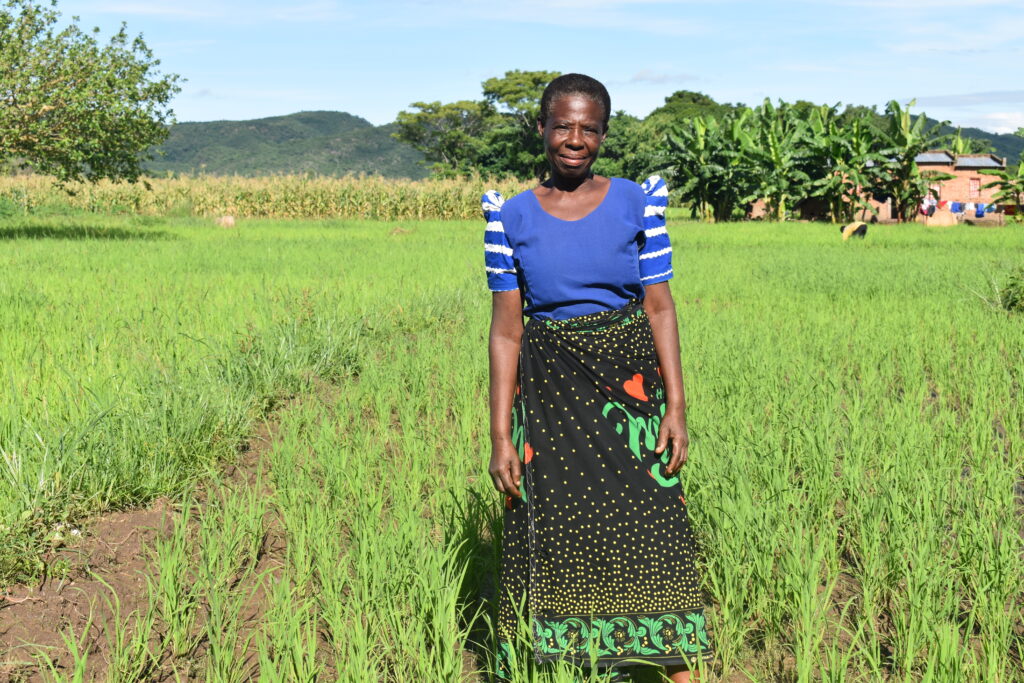

Beyond improved yields, Josephine has adopted sustainable farming practices such as making mbeya manure. This has helped her improve soil fertility while reducing the cost of purchasing chemical fertilizers, making her farming more efficient and sustainable.
The impact of the project has extended beyond the farm. With increased income and active participation in a Savings and Internal Lending Community (SILC), she has significantly improved her household’s living conditions. She has managed to build a house and plans to buy cement to complete the floor after selling this year’s harvest.


“The support I received has really changed my life and my home,” she says. “I am now able to meet my family’s needs and plan for the future.”
Through SILC, she has further strengthened her financial capacity. Using funds accessed from the group, she purchased three bags of fertilizer, which she converted into 10 bags of mbeya manure—further boosting her productivity while reducing input costs.
Her progress is also reflected in her growing livestock assets. Today, she owns two pigs, two goats, three cattle, and 15 local chickens, demonstrating improved resilience and diversified sources of livelihood.


Elizabeth expressed her deep appreciation to Lusubilo Community Care and its partner for the support, noting that the project is uplifting many families in the community. She encouraged the organization to continue helping other households so that more people can achieve food security and improve their lives.
Josephine’s story highlights the impact of Lusubilo Community Care’s Livelihood Support Project in empowering vulnerable households with skills, resources, and opportunities to build sustainable livelihoods. With continued support from Manos Unidas, more families are on a path toward food security and improved well-being